
















Anti-India Hate: A New Reality in America?
Once celebrated as quiet achievers, the Indian community in the U.S. is now facing a surge in hostility, both online and offline. This article explores the rise of anti-India sentiment, fueled by political polarization and viral hate narratives.


For decades, the Indian-American community has been viewed through the lens of the "model minority" myth—industrious, highly educated, economically successful, and socially unobtrusive. However, a significant shift is underway. What was once a community celebrated for its contributions to medicine, technology, and business is now finding itself at the center of a bipartisan backlash in the United States. This rising tide of anti-India sentiment has transcended the digital realm of social media trolls and entered mainstream political discourse and everyday life.
The Indian connection to America is as old as the continent’s "discovery" itself, with Christopher Columbus setting sail in search of India. Over centuries, Indians have woven themselves into the fabric of American society, from early immigrants like Bhicaji Framji Balsara to the thousands who were naturalized and then stripped of citizenship in the early 20th century. The community’s resilience led to its current status as one of the most affluent and educated minority groups in the country.
The Turning Point: Visibility and Success
The narrative began to change as Indian-Americans became more visible and influential. The turning point arguably came with their ascent to positions of power in Silicon Valley and Washington, D.C. The 2024 political landscape saw figures like Nikki Haley and Vivek Ramaswamy on the Republican debate stage, while Indian-origin individuals occupied key roles in the administration. This visibility, while a mark of success, also made the community a target.
The backlash is unique because it comes from both sides of the political spectrum. On the right, there is resentment towards Indians for being "too successful" and culturally distinct, often fueled by "Great Replacement" theories adapted to include skilled H-1B workers. On the left, Indians are sometimes viewed with suspicion for their economic success and perceived social conservatism, which doesn't fit neatly into traditional frameworks of oppression. This bipartisan hostility signals that Indian-Americans are no longer just a background community but a central figure in America's national anxiety about demographic and economic change.
The Architecture of Hate: Online to Offline
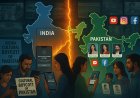
A detailed analysis by the Centre for the Study of Organized Hate (CSOH) highlights the systematic nature of this hostility. The study tracked viral posts attacking Indians on social media platforms like X (formerly Twitter), revealing a surge in hateful narratives. These posts often recycle old colonial tropes about hygiene, poverty, and food, repackaging them as viral memes. A more modern and damaging narrative accuses Indians of being demographic invaders or cheaters who have "hacked" the system to achieve success.
This online vitriol has real-world consequences. The hostility is no longer confined to fringe internet forums; it is driven by verified accounts with large followings who monetize outrage. The impact is visible in everyday incidents: roadside protests targeting Indian families, harassment of temple-goers, and racial slurs hurled in public spaces. The "model minority" myth, which once offered a degree of protection, has been weaponized against them. Indians are now targeted not despite their success, but because of it.
A Crisis of Belonging
The tragedy of this moment lies in its timing. Indian-Americans are facing this wave of hate at the very point they believed they had fully integrated into American society. They have moved from being "guests" to feeling like stakeholders in the American dream. However, their rapid rise has triggered a cultural whiplash among those who feel threatened by the shifting power dynamics.
The irony is palpable: the country that once set out to find India is now struggling to accept the Indians who are standing right in front of it. As the community grapples with this new reality, the challenge is not just about fighting hate speech but about redefining their place in a nation that is still deciding whether the American dream truly belongs to everyone.