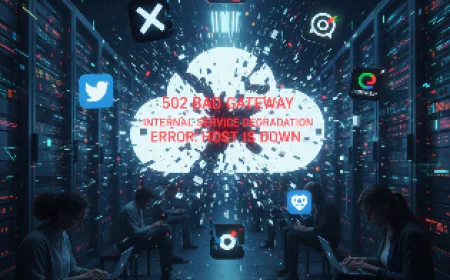






































Global Internet Outage: Cloudflare Crash Takes Down ChatGPT, Twitter, and Discord
A massive server outage at Cloudflare has caused widespread disruption across the internet, taking down major platforms like Twitter (X), ChatGPT, Discord, and Canva. Millions of users are facing "502 Bad Gateway" errors. Read the full report on the cause, impact, and current status of the digital blackout.


The fragility of the modern internet was laid bare today as a significant server outage at Cloudflare, a major web infrastructure and security company, triggered a domino effect that knocked offline some of the world's most popular digital platforms. Users across the globe—from New York to New Delhi—were left staring at blank screens and error messages as services like ChatGPT, Twitter (X), Discord, and Canva ground to a halt.
The disruption began early in the day, with reports flooding into outage tracking sites like DownDetector. What started as intermittent connectivity issues quickly escalated into a full-blown digital blackout for a vast swath of the web. For millions of users who rely on these tools for work, communication, and entertainment, the outage served as a stark reminder of how centralized the internet’s infrastructure has become.
The Scale of the Disruption
Cloudflare is often described as the "backbone" of the internet. It provides content delivery network (CDN) services, DDoS protection, and security services to millions of websites. When Cloudflare sneezes, the internet catches a cold. Today, however, it was more than a cold; it was a systemic freeze.
The impact was immediate and widespread. Users attempting to access OpenAI’s ChatGPT were greeted with login errors or a spinning wheel that led nowhere, disrupting workflows for professionals and students alike who have integrated AI into their daily routines. Simultaneously, social media users found themselves unable to refresh feeds on Twitter, leaving them cut off from real-time news and conversation.
The gaming and community platform Discord, essential for remote communities and gamers, failed to connect, while creative professionals using Canva found themselves locked out of their designs. Other major services, including crypto exchanges like Coinbase and e-commerce platforms like Shopify, also reported significant latency and connectivity drops.
The "502 Bad Gateway" Nightmare
The most common symptom of the outage was the dreaded "502 Bad Gateway" error. This HTTP status code indicates that one server on the internet received an invalid response from another server. In this context, it meant that the browsers of users were trying to reach websites, but the Cloudflare servers acting as the gateway were unable to complete the request.
Other users reported seeing "Error 504: Gateway Timeout" or specific Cloudflare-branded error pages stating that the "host is down." For the average user, the technical jargon simply translated to frustration.
-
Workflows Interrupted: Remote workers lost access to project management tools and communication hubs.
-
Social Media Silence: The usual outlet for complaining about outages—Twitter—was itself a victim, forcing users to flock to alternatives like Threads or Bluesky to vent.
-
E-commerce Hit: Online retailers faced transaction failures, potentially resulting in millions of dollars in lost revenue during the downtime.
What Went Wrong?
While Cloudflare usually maintains an uptime of 99.99%, its centralized nature means that a single configuration error or a targeted attack on its infrastructure can have global repercussions.
In its initial status update, Cloudflare acknowledged the issue, identifying it as a "critical incident" affecting its network performance and control plane. Historically, such outages are rarely the result of malicious cyberattacks. More often, they are caused by internal software updates or routing changes (BGP errors) that go wrong.
Technically, Cloudflare sits between a website's visitor and the website's hosting server. It caches content to make sites load faster and filters out malicious traffic. When this layer fails, the "bridge" between the user and the website collapses.
The Centralization Problem
This incident has once again ignited the debate regarding the centralization of the internet. A significant portion of the world's web traffic flows through just a handful of companies: Amazon Web Services (AWS), Google Cloud, Microsoft Azure, and Cloudflare.
When one of these titans stumbles, the ripple effects are catastrophic. Analysts argue that while these services provide unmatched speed and security, they also create "single points of failure." Today’s outage highlights the need for a more decentralized approach or, at the very least, better redundancy plans for critical digital services.
Recovery and Next Steps
As of the latest update, Cloudflare engineers have implemented a fix, and services are slowly coming back online. However, the "internet hangover"—laggy performance, cached errors, and queued data—may persist for several hours as traffic normalizes.
For businesses, this is a wake-up call to evaluate their dependency on single vendors for critical infrastructure. For users, it is a reminder that in the digital age, patience is a virtue, especially when the invisible wires holding the web together snap.
Would you like me to set up an alert to notify you when Cloudflare releases their official "Post-Mortem" report explaining the exact technical cause of this outage