





























Maharashtra Floods: Jayakwadi Dam's Record Discharge Displaces 9,800
The Jayakwadi Dam in Maharashtra has released a record-breaking 3 lakh cusecs of water, causing the Godavari River to swell dangerously. This article details the massive floods, the evacuation of over 9,800 residents, and the emergency measures taken by the Jalna district administration.

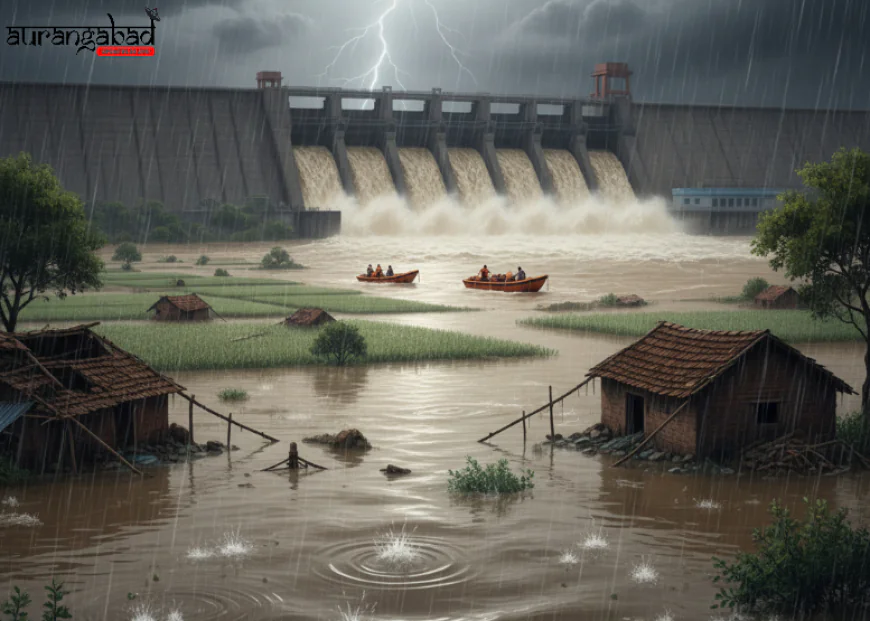
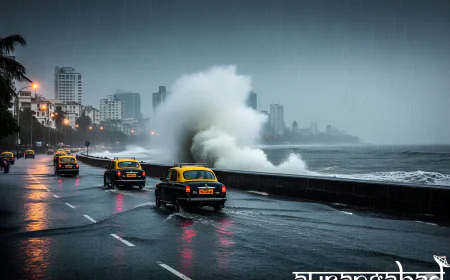
Maharashtra is grappling with a severe flood crisis, primarily concentrated in the Marathwada region, as the Jayakwadi Major Irrigation Project has been forced to release an unprecedented volume of water. The dam, situated in Chhatrapati Sambhajinagar district, witnessed a record discharge exceeding 3 lakh cusecs by Sunday night, shattering its previous 2006 record of 2.5 lakh cusecs.
This massive and rapid discharge has caused the Godavari River to swell to perilous levels, leading to the forced displacement of more than 9,800 residents in the downstream areas, with Jalna district bearing the brunt of the emergency.
Mass Evacuation in Downstream Districts
The Jalna district administration, under the leadership of District Collector Ashima Mittal, immediately moved into crisis mode. Residents from vulnerable villages nestled along the banks of the Godavari—particularly in the Partur, Ambad, and Ghansawangi talukas—were shifted to safer locations. These displaced citizens have been accommodated in secure shelters such as Zilla Parishad schools and community centers.
The sheer volume of water released was a direct consequence of relentless heavy rainfall in the catchment areas combined with large inflows from upstream reservoirs. While the dam discharge was subsequently reduced to just over 2 lakh cusecs by Monday morning, authorities remain vigilant. Officials have confirmed that alerts have been issued across all downstream areas, urging residents to adhere strictly to safety instructions.
Ongoing Rescue Operations and Local Impact
While the flood situation is primarily downstream, the upstream areas, including parts of Chhatrapati Sambhajinagar district, were already reeling from triple-digit rainfall. Rescue operations were simultaneously launched in Vaijapur and Gangapur talukas, resulting in the successful shifting of approximately 25 residents who were initially stranded by rising waters.
The crisis is not confined to one district. The adjacent Beed district also saw evacuation efforts, with about 12 residents from Sangwi village in Ashti taluka moved to safety. Though the heavy rainfall has momentarily eased across the Marathwada region, authorities are now bracing for the aftermath, including extensive crop damage and infrastructure repair. The break in the weather is expected to allow river levels to subside, but the scale of the damage to agriculture and property is still being assessed.
The emergency response, involving multiple government departments and disaster management squads, remains on high alert, emphasizing that the safety of citizens along the swollen river banks is the absolute priority.