


















Kevin O'Leary's Radical Pivot: Why Storytelling Beats Engineering in the AI Era
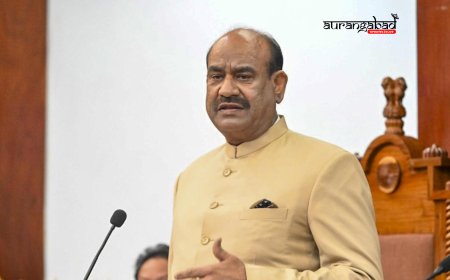
"Shark Tank" star Kevin O'Leary once declared engineering the only degree worth pursuing. Now, citing the rise of AI, he argues that creative storytelling and communication skills are the new path to wealth, with top creators out-earning engineers.


For over a decade, Kevin O'Leary—the sharp-tongued investor known as "Mr. Wonderful" on Shark Tank—has preached a singular gospel to students: Study engineering. In his view, technical skills were the only reliable path to financial freedom, while liberal arts degrees were often dismissed as a "waste of time" with a poor return on investment.
However, in a move that has surprised the business and education communities, O'Leary has officially flipped the script. In a recent statement that reflects the seismic shifts caused by Artificial Intelligence (AI), the Canadian millionaire declared that engineering is no longer the "golden ticket" it once was. Instead, he is placing his bets on a skill set he previously undervalued: creative storytelling.
The Old Gospel: "Engineering, Engineering, Engineering"
To understand the weight of this pivot, one must look at O'Leary's track record. For years, he advised young people to view education strictly as an investment. His logic was cold and mathematical: if you are going to take on debt for a degree, it must result in a high-paying job immediately upon graduation.
"If you're asking me what my top three picks are, you've got it: No. 1 engineering, No. 2 engineering, No. 3, go with engineering," O'Leary famously told CNBC in 2018. He argued that the technical know-how to build things—bridges, software, hardware—was the scarcest and most valuable commodity in the global economy.
The New Reality: The "Commoditization" of Code
So, what changed? The answer lies in the rapid ascent of Generative AI. Tools like ChatGPT, Claude, and GitHub Copilot have fundamentally altered the landscape of technical work. Writing basic code, debugging software, and performing complex calculations—tasks that once required a four-year engineering degree—can now be accelerated or even fully automated by AI agents.
O'Leary posits that while we will always need brilliant engineers to push the boundaries of innovation, the "rank and file" coding jobs are becoming commoditized. If an AI can write a script in seconds that would take a human hours, the premium on that human skill naturally diminishes.
The Rise of the Storyteller
In a recent post on X (formerly Twitter), O'Leary highlighted where he sees the real money moving in 2025 and beyond.
"Ten years ago I said engineering was the only master's degree worth pursuing. Not anymore. The fastest wage growth today is in creative storytelling across social media," O'Leary wrote.
His rationale is rooted in the bottom line of business: Customer Acquisition Cost (CAC) and Return on Ad Spend (ROAS). In a saturated digital marketplace, the ability to build a product is secondary to the ability to sell it.
-
The Human Element: AI can crunch numbers, but it struggles to replicate genuine human emotion, intuition, and connection.
-
Sales Power: A video editor, writer, or content creator who can craft a narrative that goes viral can lower a company's customer acquisition costs to near zero. That value is immense.
-
High Earnings: O'Leary noted that elite content creators aren't making entry-level salaries. "Those creators aren't making $25K… they're making $250K or $800K across multiple companies," he stated. "Why? Because they're measurable. Content is king, and the storytellers are winning."
A Vindication for Liberal Arts?
This shift offers a surprising vindication for the Liberal Arts—disciplines like psychology, history, writing, and philosophy that focus on the "human experience."
While O'Leary hasn't explicitly endorsed "Liberal Arts degrees" as a whole, his emphasis on communication, persuasion, and psychology aligns perfectly with the skills those degrees cultivate. To tell a good story, you need to understand people: what motivates them, what scares them, and what makes them click "buy."
In an AI-dominated world, the "soft skills" of empathy and communication are becoming the "hard currency" of the labor market. As machines take over the logical, left-brain tasks, the creative, right-brain tasks are increasing in value.
Advice for the Class of 2025
For students currently navigating their educational path, O'Leary's new stance suggests a "hybrid" approach might be best.
-
Don't Ditch Tech Entirely: You still need to understand how to use the tools. Being "AI-literate" is non-negotiable.
-
Master Communication: Whether it's video editing, copywriting, or public speaking, the ability to transmit ideas clearly and persuasively is crucial.
-
Focus on ROI: O'Leary is still a capitalist. He isn't suggesting you become a "starving artist." He is suggesting you become a "commercial artist"—someone whose creativity drives measurable revenue.