


























Explained: Can the Opposition Remove the Lok Sabha Speaker? The Procedure, Article 94, and the Numbers Game
The Opposition has moved a resolution to remove the Lok Sabha Speaker, escalating tensions in Parliament. How does Article 94 work? Does the I.N.D.I.A. bloc have the 272+ votes needed? Here is a deep dive into the constitutional rules and the math behind the motion.

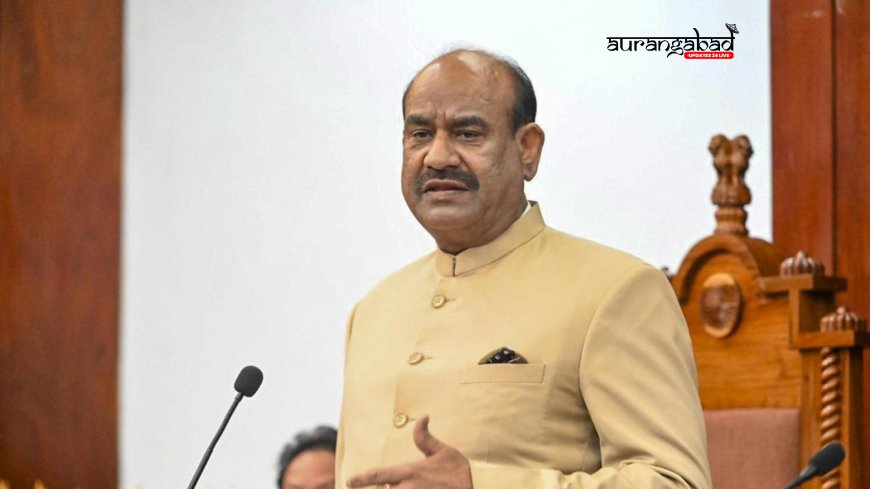
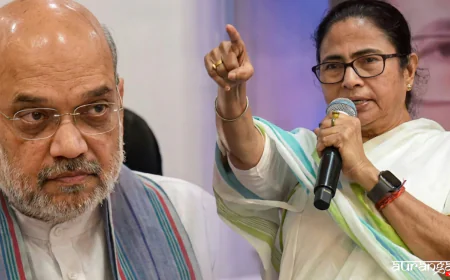
New Delhi: The ongoing Budget Session of Parliament has witnessed a dramatic escalation in the standoff between the ruling NDA government and the Opposition. In a rare political maneuver, the Opposition bloc has signaled its intent to move a resolution for the removal of the Lok Sabha Speaker.
While disruptions and walkouts are common, targeting the Chair—the custodian of the House—is a significant constitutional step. But is this move merely symbolic, or does the Opposition actually have the numbers to unseat the Speaker?
Here is a detailed explanation of the constitutional procedure and the political arithmetic involved.
1. The Constitutional Procedure: Article 94
The removal of the Speaker is governed by Article 94(c) of the Constitution of India. It is not as simple as a shouting match; it requires a rigid legal process.
-
14-Day Notice: The Opposition cannot remove the Speaker overnight. They must provide a mandatory 14-day notice of their intention to move the resolution.
-
Leave of the House: Once the 14 days are up, the motion must be taken up in the Lok Sabha. Under the Rules of Procedure, at least 50 MPs must rise in support of the motion for it to be admitted for discussion.
-
Who Presides? Crucially, under Article 96, the Speaker cannot preside over the Lok Sabha sitting while a resolution for his/her removal is under consideration. The Deputy Speaker or a member of the Panel of Chairpersons takes the chair. The Speaker, however, has the right to speak and vote in the first instance (like an ordinary MP) but not in the case of a tie.
2. The Magic Number: "Effective Majority"
This is where it gets tricky. To pass the resolution and remove the Speaker, the Opposition needs an "Effective Majority".
-
What is it? It is more than 50% of the then members of the House.
-
The Calculation:
-
Total Strength of Lok Sabha: 543
-
Vacancies (Hypothetical): Let's assume 3 seats are vacant.
-
Effective Strength: 540
-
Majority Required: 271 votes (50% of 540 + 1).
-
3. The Numbers Game: Does the Opposition Have a Chance?
Currently, the numbers heavily favor the ruling dispensation.
-
NDA Strength: The BJP-led National Democratic Alliance (NDA) comfortably holds over 290 seats in the Lok Sabha.
-
Opposition Strength: The I.N.D.I.A. bloc, despite its improved performance in recent years, hovers around the 230-240 mark (depending on the support of non-aligned parties).
The Verdict: Mathematically, the Opposition falls short of the ~272 mark required to pass the motion. Unless there is a massive cross-voting or a split within the ruling coalition—which is highly unlikely—the motion is destined to be defeated on the floor of the House.
4. Why Move the Motion Then?
If they know they will lose, why is the Opposition doing this? Political analysts suggest three reasons:
-
Symbolism: It registers a formal protest against what they allege is "partisan conduct" by the Chair (e.g., switching off mics, suspending MPs).
-
Debate: A no-confidence motion forces a debate. The Opposition wants a platform to air their grievances against the Speaker's style of functioning on national television.
-
Pressure: It is a pressure tactic to force the Chair to be more accommodating in future sessions.
5. Historical Precedent
Removing a Speaker is historically rare.
-
G.V. Mavalankar (1954): The first-ever motion to remove a Speaker was moved against the first Lok Sabha Speaker, G.V. Mavalankar. It was debated but defeated.
-
Since then, while threats have been made, no Speaker has ever been removed through such a resolution in independent India’s history.
Conclusion: While the notice creates political ripples and dominates headlines, the "No-Confidence Motion" against the Speaker is unlikely to succeed numerically. It remains, however, a powerful tool for the Opposition to signal that they believe the referee of the House is no longer neutral.