




































Japan Election 2026 Results: PM Sanae Takaichi’s ‘LDP’ Sweeps Polls with Supermajority; Opposition Crushed
Prime Minister Sanae Takaichi has led the Liberal Democratic Party (LDP) to a historic landslide victory in the 2026 Japan General Election. The ruling coalition has secured a two-thirds supermajority, crushing the newly formed Centrist Reform Alliance. Read the full analysis of the winner, the loser, and what Takaichi’s "Iron Lady" agenda means for the world.


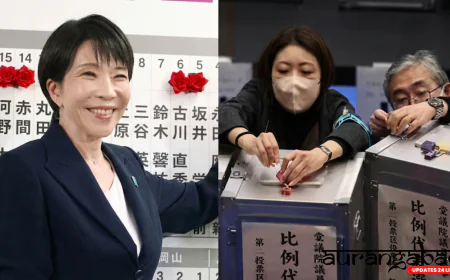
Tokyo: In a political earthquake that has reshaped Japan's parliamentary landscape, Prime Minister Sanae Takaichi has led her ruling Liberal Democratic Party (LDP) to a stunning landslide victory in the snap general election held on Sunday, February 8, 2026.
Defying critics and capitalizing on her soaring popularity, Japan’s first female Prime Minister has secured a massive mandate that gives her unchecked power to reshape the nation's economy and defense posture.
Who Won? The LDP Juggernaut
The election results, released on Monday morning, paint a picture of total dominance for the conservative bloc.
-
The Numbers: The LDP alone has won 316 seats in the 465-seat Lower House, comfortably surpassing the simple majority mark of 233.
-
The Supermajority: Together with its new coalition partner, the Japan Innovation Party (Ishin), the ruling bloc now controls 352 seats. This constitutes a "two-thirds supermajority," a critical threshold that allows the Lower House to override vetoes from the Upper House and initiate constitutional amendments.
-
Historic Feat: This is the best performance by the LDP in decades, surpassing even the legendary victories of former PM Shinzo Abe. Takaichi’s gamble to call a snap election just three months into her tenure has paid off spectacularly.
Who Lost? The Opposition Meltdown
The election was a bloodbath for the opposition, particularly the newly formed Centrist Reform Alliance.
-
The Collapse: The Alliance, a merger of the Constitutional Democratic Party of Japan (CDP) and the LDP’s former ally Komeito, failed to present a coherent alternative. Their seat count plummeted from a pre-election strength of 167 to a humiliating 49 seats.
-
Resignations Loom: Opposition co-leaders Yoshihiko Noda and Tetsuo Saito have admitted the results are a "bitter blow," with reports suggesting their resignations are imminent.
Who is Sanae Takaichi?
Often called Japan’s "Iron Lady" due to her admiration for Margaret Thatcher, 64-year-old Sanae Takaichi is a political hawk who shattered the glass ceiling to become Japan’s first female leader in October 2025.
-
The "Hawk": A protégé of the late Shinzo Abe, she is known for her nationalist views. She advocates for visiting the controversial Yasukuni Shrine and has taken a hardline stance against China, explicitly stating that "a threat to Taiwan is a threat to Japan."
-
Social Conservative: Despite being a woman in power, she opposes same-sex marriage and the option for married couples to have separate surnames, endearing her to Japan’s traditionalist base.
What Does This Mean for Japan and the World?
With a supermajority in hand, Takaichi is expected to unleash her controversial agenda, dubbed "Sanaenomics":
-
Defense Spending: She plans to double defense spending and export lethal weapons, fundamentally moving Japan away from its post-WWII pacifism.
-
Constitutional Change: The victory clears the path for her lifelong goal: revising Article 9 of the Constitution to formally recognize the Japan Self-Defense Forces.
-
Economy: Takaichi has promised "crisis management investment" in AI and chips, along with a temporary suspension of consumption tax on food to combat inflation—a move that has spooked fiscal hawks but delighted voters.
Conclusion: The 2026 election has ended Japan's era of revolving-door politics. Sanae Takaichi has emerged not just as a survivor, but as a titan of Japanese politics. As world leaders, including US President Donald Trump, rush to congratulate her, Beijing will be watching warily. Japan has chosen strength and stability, even if it comes with a sharper, more nationalist edge.