






















"A Dushasana Has Come": Mamata Banerjee Hits Back at Amit Shah, Denies 'No Land' Charge for Border Fencing
West Bengal CM Mamata Banerjee launches a scathing attack on Amit Shah, comparing BJP leaders to "Dushasana" and "Duryodhana." She vehemently denies charges of blocking land for border fencing, citing Petrapole and Andal as proof of state cooperation ahead of the 2026 polls.


Kolkata/Bankura: The political temperature in West Bengal has reached a boiling point well ahead of the 2026 Assembly elections. In a blistering counter-offensive on Tuesday, Chief Minister Mamata Banerjee likened Union Home Minister Amit Shah and the BJP leadership to the villainous characters of the Mahabharata—Duryodhana and Dushasana—while fiercely rejecting allegations that her government was obstructing national security measures.
The war of words erupted hours after Amit Shah, during a press conference in Kolkata, accused the Trinamool Congress (TMC) government of failing to provide land for border fencing, thereby aiding illegal infiltration for "vote bank politics."
The 'Dushasana' Jibe: A Mythological Sting
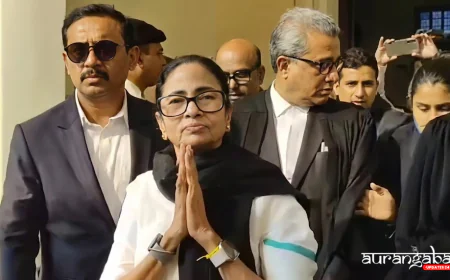
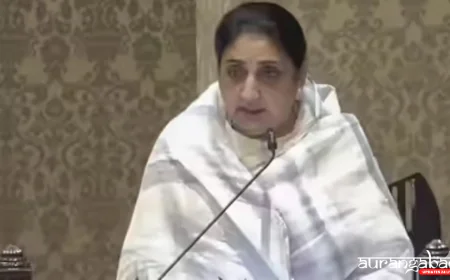
Addressing a fiery public rally in the Bankura district, Mamata Banerjee did not mince words. Responding to Shah's visit and his sharp critique of her governance, she reached into Indian mythology to paint the BJP leadership as aggressors.
"A Dushasana has come to Bengal. As soon as the elections approach, Dushasana and Duryodhana start appearing here," Banerjee declared, addressing a massive crowd. "He is a disciple of Shakuni, who has come to gather information to harass the people."
The comparison to Dushasana—the Kaurava prince known for his role in the disrobing of Draupadi—is a loaded political metaphor in Bengal, often used to imply a threat to the dignity and safety of the state's women and culture. Banerjee framed Shah’s visit not as an administrative review, but as a predatory move by an outsider force intent on disturbing the peace of "Banga Bhoomi."
The 'No Land' Controversy: Fact vs. Accusation
The core of the administrative clash lies in the India-Bangladesh border fencing project.
Earlier in the day, Amit Shah had alleged that the fencing of the international border was incomplete because the state government was refusing to acquire and hand over the necessary land to the Border Security Force (BSF). "Which government refuses to provide land for border fencing? It is your government... You want to change Bengal's demography to expand your vote bank," Shah had charged.
Mamata Banerjee issued a point-by-point rebuttal to this claim, calling it "baseless propaganda."
Mamata’s Counter-Arguments:
-
Petrapole and Andal: She questioned how major central projects could exist if the state was non-cooperative. "If I hadn't given the land, what would have happened? Who gave the land in Petrapole (border checkpost)? Who gave the land for the Andal airport project?" she asked, asserting that her government has consistently facilitated development where genuine national interest is involved.
-
Railways and Coal: She further argued, "How were railway lines laid and coal projects built if the state wasn't providing land?"
-
State Cooperation: The Chief Minister insisted that land has already been provided in critical border areas like Changrabandha and Petrapole, and accused the Centre of using the land issue as a smokescreen for its own failures in managing the border.
National Security or Political Tool?
The debate over infiltration has become the central theme for the BJP's 2026 campaign. Amit Shah termed the porous Bengal border a "national security issue" rather than just a state problem. He promised that if the BJP wins a two-thirds majority in 2026, they would "seal the borders" and stop the influx of illegal immigrants.
Mamata Banerjee, however, turned the tables by questioning the central government's track record on security elsewhere in India.
"They say that immigrants only come from Bengal. If that's the case, then who carried out the attack in Pahalgam? Who was behind the security breach in Delhi?" she demanded.
Her rhetoric aims to decouple the issue of border security from the state government's jurisdiction, placing the onus back on the BSF and the Central Home Ministry, which are responsible for guarding international borders.
The 'SIR' Scare
Another flashpoint highlighted by Banerjee was the ongoing Special Intensive Revision (SIR) of electoral rolls. She alleged that the BJP is using this exercise to delete the names of legitimate voters under the guise of removing "infiltrators."
"They are harassing people in the name of SIR. I warn you, if you try to delete the name of even a single valid citizen, there will be consequences," she warned, positioning herself as the protector of the common Bengali citizen against central overreach.
Conclusion: The Battle Lines are Drawn
The exchange between the Home Minister and the Chief Minister signals that the 2026 West Bengal Assembly election will be fought on highly polarized lines. While the BJP is banking on the narrative of "National Security, Corruption, and Demography," the TMC is digging in its heels with the "Insider vs. Outsider" (Bengali pride) narrative, painting central leaders as mythological villains out to destroy the state's harmony.
As the political heat rises, the question of land acquisition for border fencing remains unresolved, caught in the crossfire of a bitter power struggle.