
























MGNREGA Replaced: Lok Sabha Passes VB-G RAM G Bill Amid Opposition Ruckus
The Lok Sabha passed the Viksit Bharat Guarantee for Rozgar and Ajeevika Mission (Gramin) Bill, 2025, replacing the 20-year-old MGNREGA. The new law guarantees 125 days of employment but faces severe opposition over the removal of Mahatma Gandhi's name. Read the key details here.

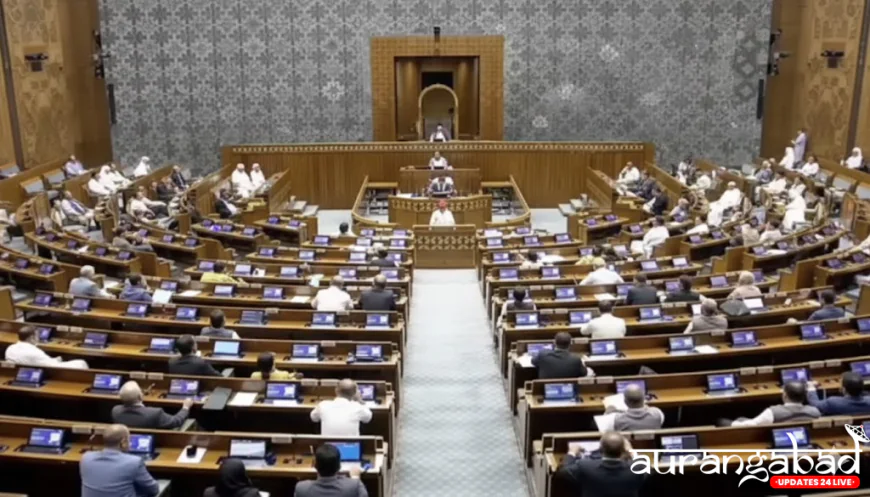
New Delhi: In a legislative move that marks a paradigm shift in India’s rural welfare landscape, the Lok Sabha on Thursday, December 18, 2025, passed the Viksit Bharat Guarantee for Rozgar and Ajeevika Mission (Gramin) Bill, colloquially termed the VB-G RAM G Bill.
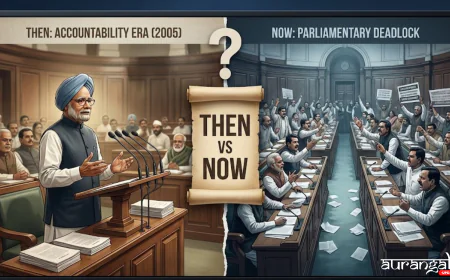
The legislation, which seeks to repeal and replace the 20-year-old Mahatma Gandhi National Rural Employment Guarantee Act (MGNREGA), was cleared by a voice vote amidst unprecedented scenes of protest, slogan-shouting, and tearing of bill copies by Opposition members.
The government has pitched the bill as a necessary evolution to fuel the "Viksit Bharat" (Developed India) vision by 2047, while the Opposition has termed it an "assault on the legacy of Mahatma Gandhi" and the rights of the rural poor.
What is the VB-G RAM G Bill?
The Viksit Bharat Guarantee for Rozgar and Ajeevika Mission (Gramin) creates a new statutory framework for rural employment. While it builds on the foundation of the previous act, it introduces key structural changes:
-
Increased Work Days: Unlike MGNREGA, which guaranteed 100 days of work, the new VB-G RAM G Bill provides a statutory guarantee of 125 days of wage employment in a financial year to every rural household whose adult members volunteer for unskilled manual work.
-
Focus on Asset Creation: The bill emphasizes "tangible asset creation" over mere digging work. The government claims this will integrate rural infrastructure with national development goals.
-
Removal of 'Mahatma Gandhi': The most contentious aspect is the removal of the Father of the Nation's name from the title, rebranding the scheme under the "Viksit Bharat" umbrella.
-
State Responsibility: The new law mandates states to frame specific schemes consistent with the central act within six months of its notification.
Government's Stance: "From Digging Pits to Building Future"
Moving the bill for consideration, Union Rural Development Minister Shivraj Singh Chouhan defended the legislation vigorously. He argued that the previous MGNREGA had been reduced to a scheme of "digging pits and filling them," failing to create sustainable rural assets.
"This bill is not just about employment; it is about self-reliance. It fulfills Mahatma Gandhi's true vision of Gram Swaraj by ensuring that villages become growth engines, not just beneficiaries," Chouhan stated.
BJP MP Brijmohan Agarwal further supported the bill, alleging that MGNREGA had become a den of corruption under previous regimes. He claimed that the inclusion of "Ram" (in the acronym RAM-G) symbolizes a commitment to righteousness and will deter corruption.
Opposition's Fury: "Deleting History, Destroying Rights"
The debate saw fierce opposition from the INDIA bloc parties. Trinamool Congress (TMC) MP Mahua Moitra launched a scathing attack on the Centre, accusing it of trying to erase the legacy of Mahatma Gandhi and Rabindranath Tagore.
"You are destroying the idea of Ram Rajya both in letter and spirit," Moitra argued. "This government believes in 'Na kisi ka saath, na kisi ka vikas'. You are dishonouring the Father of the Nation by stripping his name from the world's largest social security program."
Congress MP Jai Prakash termed the removal of Gandhi's name "the biggest crime." He warned that the new provisions would weaken Gram Sabhas (village councils) and strip them of their autonomy to decide on local works, centralizing power in New Delhi. The Opposition also raised concerns that the new "asset creation" norms might exclude the poorest, unskilled laborers who relied on the simpler nature of MGNREGA work.
A House in Disorder
The proceedings were marred by constant disruptions. As the government moved to pass the bill, Opposition MPs rushed to the well of the House, shouting slogans against the "anti-poor" legislation. Several MPs were seen tearing copies of the bill in protest.
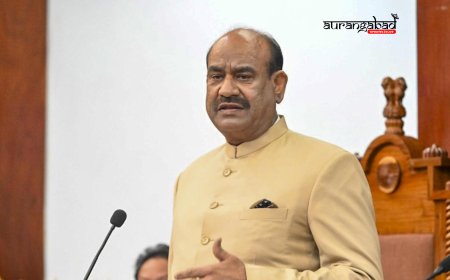
Despite the ruckus, Speaker Om Birla proceeded with the voice vote. The bill was declared passed, following which the House was adjourned for the day due to the prevailing disorder.
What Next for Rural India?
With the Lok Sabha's approval, the bill now moves to the Rajya Sabha, where the government will face another test. If passed there and signed by the President, the VB-G RAM G Act will officially end the two-decade run of MGNREGA.
For India's rural population, the transition promises 25 extra days of work but brings uncertainty regarding the implementation of new, stricter norms for "asset creation." As political temperatures rise in Delhi, the true impact will be felt in the dusty village lanes where this guarantee is a lifeline for millions.