






























'Founder Mode' On: Sergey Brin’s Antigravity Cameo Signals Google’s AI Aggression
Google co-founder Sergey Brin has stunned the tech world with a surprise appearance in the launch video for "Antigravity," a new AI-powered coding tool. This move signals a definitive shift to "Founder Mode" at Google as it races to dominate the AI era.


In the high-stakes arena of Silicon Valley, where executive appearances are usually reserved for polished keynotes and quarterly earnings calls, a recent video has sent shockwaves through the developer community. Sergey Brin, the elusive co-founder of Google who stepped back from day-to-day operations in 2019, has resurfaced—not in a boardroom, but in a coding demo. His casual yet commanding appearance in the launch video for Antigravity, Google’s new "agent-first" IDE, is being hailed as the ultimate signal that "Founder Mode" is fully activated at the tech giant.
This isn't just a celebrity cameo; it is a statement of intent. As Google faces its most significant existential threat since its inception—the rise of generative AI—Brin’s return to the engineering frontlines underscores a radical cultural shift within the company. It signals that the era of delegation is over, and the era of hands-on, product-obsessed leadership is back.
The Antigravity Launch: A New Paradigm for Coding
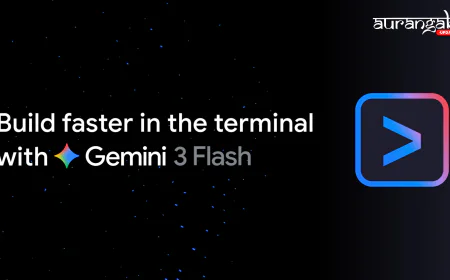
The video in question introduces Antigravity, a revolutionary development platform built on the foundation of Google’s latest Gemini 3 model. Unlike traditional coding assistants that merely autocomplete lines of text, Antigravity is described as an "agentic" IDE. It doesn't just assist; it acts.
In the video, Brin appears alongside Varun Mohan, the co-founder of Windsurf, a startup whose core team was recently acqui-hired by Google for a reported $2.4 billion. The chemistry is palpable—two engineers geeking out over code. Brin isn’t there to read a teleprompter; he is there to inspect the product.
What makes Antigravity special?
-
Agent-First Architecture: The tool allows developers to spawn autonomous AI agents that can plan, execute, test, and verify complex tasks across multiple environments—code editors, terminals, and even web browsers.
-
The "Manager View": Instead of just a text editor, Antigravity offers a "Mission Control" dashboard. Here, a human developer acts as an architect, dispatching multiple AI agents to handle different bugs or features simultaneously. It transforms the coder from a writer of syntax to a manager of intelligent bots.
-
Artifacts: To solve the "black box" problem of AI, Antigravity generates "Artifacts"—verifiable logs of what the AI did, including screenshots, task lists, and browser recordings. This ensures trust and transparency.
Brin’s excitement in the video is visible. He engages with the tool not as an executive reviewing a slide deck, but as a hacker impressed by a new superpower.
Defining "Founder Mode"
The term "Founder Mode" has recently entered the Silicon Valley lexicon, popularized by an essay from Y Combinator co-founder Paul Graham. It describes a management style where founders reject the traditional, hands-off "manager mode" taught in business schools. Instead of delegating everything to professional managers and getting filtered information, founders in this mode dive deep into the details, skip skip-level meetings, and directly engage with the product and the people building it.
Sergey Brin’s involvement with Antigravity is the textbook definition of this concept.
For years, Google was criticized for becoming bureaucratic and slow—a "Manager Mode" company. Products were often killed before launch, and innovation seemed stifled by layers of approval. Brin’s return changes the optics entirely. He is reportedly spending days at Google’s Mountain View headquarters, sitting next to engineers, writing code for Gemini, and debugging model hallucinations.
His presence sends a powerful message to the workforce: The founders are watching, they are working, and the urgency is real. It cuts through the red tape and signals that technical excellence is once again the highest priority.
The Strategic Context: Google vs. The World
Brin’s re-emergence comes at a critical juncture. Google is currently fighting a multi-front war.
-
The AI Race: OpenAI (backed by Microsoft) and Anthropic are aggressively pushing the boundaries of Large Language Models (LLMs). Google’s dominance in search and information retrieval is being challenged for the first time in decades.
-
Talent Retention: Top AI researchers have been leaving Google to start their own ventures or join rivals. Having a legendary co-founder back in the trenches serves as a powerful recruiting and retention tool. It reminds employees that they are working for a company with deep engineering DNA.
The acquisition of the Windsurf team and the launch of Antigravity are direct counter-strikes. By integrating a state-of-the-art coding agent directly into the developer workflow, Google is trying to capture the hearts and minds of the people building the future—software engineers. If Google owns the tools developers use (Antigravity) and the models that power them (Gemini 3), it secures a massive competitive moat.
Brin’s Personal Renaissance
In candid moments, Brin has admitted that his "retirement" didn't stick. "I thought, 'That's been good. I want to do something else. I want to hang out in cafes and read physics books.' And then a month later, I was like, 'That's not really happening,'" he recalled at a summit.
The allure of the AI revolution was too strong to resist. Brin sees the development of Artificial General Intelligence (AGI) as the most exciting scientific challenge of our time. His goal is bold and public: he wants Gemini to be the first true AGI. This isn't just about market share; for Brin, it’s about scientific legacy.
Conclusion: A Wake-Up Call for the Industry
Sergey Brin’s cameo in the Antigravity launch is more than a marketing stunt; it is a declaration of war against complacency. It signifies that Google is shedding its corporate skin and returning to its startup roots.
For the broader tech industry, it serves as a warning. When a billionaire co-founder decides to stop "hanging out in cafes" and start shipping code, it means the stakes have never been higher. "Founder Mode" is not just a buzzword; at Google, it is now the operating system.
This video provides a hands-on look at the Antigravity tool discussed in the article, demonstrating its "agentic" capabilities in a real-world workflow.