
































Market Wrap Dec 17: Sensex, Nifty End Volatile Session in Red; IT Stocks Bleed Amid Rupee Recovery
Sensex and Nifty ended lower on December 17, 2025, dragged down by a sell-off in IT stocks due to US visa concerns. While the Rupee staged a sharp recovery, FII selling pressure kept the bulls at bay. Read the full market analysis.


Mumbai: The Indian equity markets witnessed another day of turbulent trading on Wednesday, December 17, 2025, as the tug-of-war between domestic resilience and global headwinds continued to play out on Dalal Street. Despite a spirited recovery in the domestic currency, equity benchmarks succumbed to selling pressure in the final hour of trade, extending their losing streak.
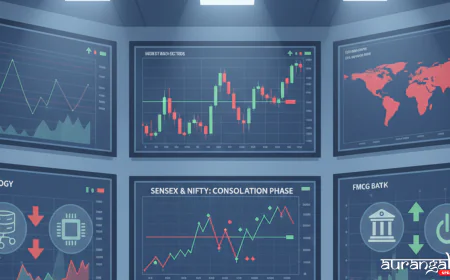
The 30-share BSE Sensex shed 120.21 points to close at 84,559.65, while the broader NSE Nifty 50 dipped 41.55 points to settle at 25,818.55. The session was characterized by high volatility, driven primarily by a sharp sell-off in Information Technology (IT) stocks and sustained selling by Foreign Institutional Investors (FIIs).
The IT Sector Meltdown: Trump Policy Fears Weigh Heavy
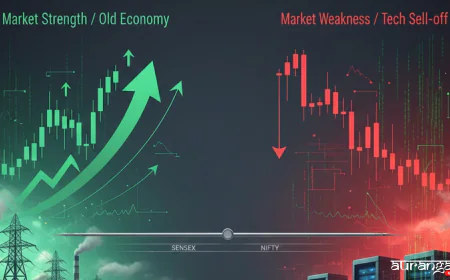
The biggest drag on the indices today was undoubtedly the IT sector. The Nifty IT index cracked significantly, emerging as the top sectoral loser. The sentiment in Indian tech stocks has turned sour following reports from the United States regarding the Trump administration's aggressive stance on H-1B visas.
With proposals to hike H-1B visa fees to nearly $100,000 and tighten eligibility norms, Indian IT giants like TCS, Infosys, Wipro, and HCL Technologies faced the brunt of the bearish sentiment. Investors are wary that these protectionist policies will severely impact the operating margins of these companies, which rely heavily on deploying talent to the US.
-
Infosys and TCS were among the top laggards, eroding significant market capitalization.
-
Mid-cap IT stocks also faced the heat, mirroring the weakness of their larger peers.
Rupee Rebounds, But Equities Struggle
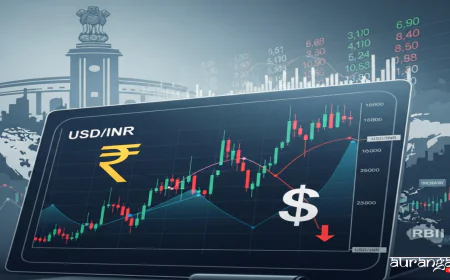
An interesting divergence was observed today between the currency and equity markets. While the stock market ended in the red, the Indian Rupee (INR) staged a remarkable comeback.
Snapping a five-day losing streak, the Rupee recovered 55 paise to close at 90.38 against the US Dollar. Market insiders attribute this recovery to aggressive intervention by the Reserve Bank of India (RBI), which reportedly sold dollars to prevent the currency from staying below the historic low of 91.
Typically, a strengthening Rupee is a positive signal for equities as it indicates macroeconomic stability. However, the relentless selling by foreign investors overshadowed this positive development. The market seems to be pricing in the risk that while the RBI can manage volatility, the structural headwinds of US tariffs and trade wars are here to stay for the medium term.
FII vs. DII: The Ongoing Battle
The narrative of "Foreign Selling vs. Domestic Buying" continues to define the market structure in late 2025.
-
Foreign Institutional Investors (FIIs): FIIs have remained net sellers for the past several sessions. The strengthening US Dollar index and rising bond yields in the US are prompting global funds to pull money out of emerging markets like India and redeploy it in American assets. Data from the previous session showed FIIs offloaded equities worth over ₹2,300 crore.
-
Domestic Institutional Investors (DIIs): On the flip side, DIIs, including Mutual Funds and insurance companies, continue to lend support to the market, buying the dip. However, their buying power was insufficient today to completely absorb the selling pressure from FIIs and nervous retail traders.
Sectoral Watch: Banks and Auto Show Resilience
While IT bled, other sectors provided some cushion to the falling market.
-
Banking & Financials: The Nifty Bank index showed resilience, trading with a mixed bias. Select private sector banks like HDFC Bank and ICICI Bank saw value buying at lower levels, preventing a steeper fall in the benchmark indices. The RBI's proactive stance on the currency front also provided some comfort to banking stocks.
-
Auto: The Auto sector witnessed stock-specific action. With year-end discounts boosting sales numbers and commodity prices stabilizing, some auto majors managed to trade in the green.
-
Energy: Oil & Gas stocks remained under pressure as Brent crude prices ticked up to $60.16 per barrel. Higher oil prices are generally a negative for Indian equities as they increase the import bill and inflationary pressure.
Broader Market and Global Cues
The broader market indices, Nifty Midcap 100 and Nifty Smallcap 100, outperformed the benchmarks slightly but still ended on a flat-to-negative note. This indicates that the nervousness is not limited to large-caps; retail investors in the broader market are also booking profits ahead of the year-end holidays.
Global Markets: Asian markets ended mixed, with the Nikkei (Japan) and Hang Seng (Hong Kong) struggling for direction. European markets opened lower, reacting to global trade tensions. In the US, futures indicate a cautious opening as Wall Street awaits further clarity on the Federal Reserve's interest rate trajectory for 2026.
Expert Outlook: Strategy for Tomorrow
Market analysts advise caution in the current scenario. The volatility index (India VIX) remains elevated, suggesting that wide swings in the market will continue.
Technical View: Technically, the Nifty 50 has formed a bearish candle on the daily charts. The index faces stiff resistance at the 26,000 mark. On the downside, 25,700 acts as a crucial support level. If this level is breached, the index could slide further toward 25,500.
Investment Strategy:
-
Avoid IT: Analysts suggest staying away from the IT sector until there is clarity on the US visa policies.
-
Focus on Domestic Plays: Sectors like FMCG, Infrastructure, and Banking, which are driven by domestic consumption and capex, are viewed as safer bets compared to export-oriented sectors.
-
Buy on Dips: For long-term investors, the current correction offers an opportunity to accumulate quality large-cap stocks at better valuations.
Conclusion
December 17, 2025, will be remembered as a day of consolidation and correction. The market is currently sandwiched between negative global news flows (US tariffs/visas) and positive domestic interventions (RBI action).
As the year comes to a close, investors are advised to keep a close watch on the Rupee's movement and FII activity. Until the FII selling subsides, the market is likely to remain "sell on rise."