


























Homi Bhabha’s 1955 Blueprint: Vital Lessons for India’s AI Ambitions in 2026
As the world races for AI dominance, India looks back at Homi Bhabha's strategy during the Cold War nuclear era. From the 1955 Geneva Conference to "Sovereign AI," here are the critical Do’s and Don’ts for India’s tech future.

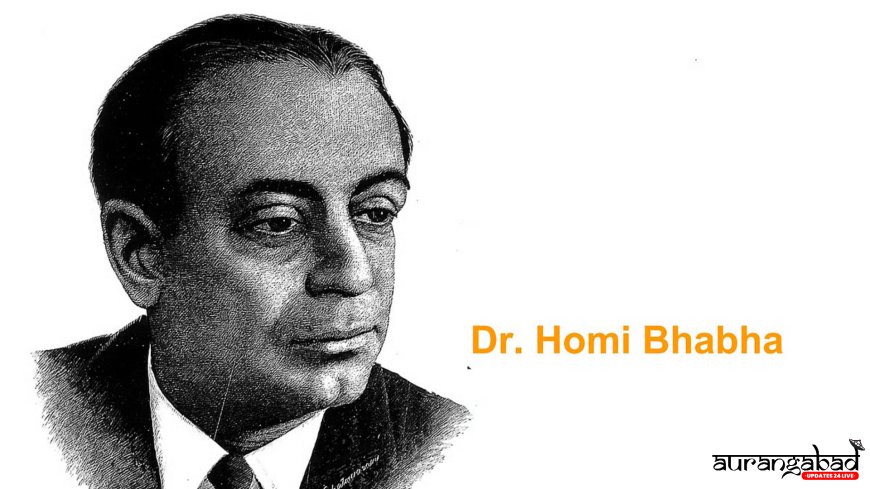
New Delhi: History often rhymes, and for India’s technology policymakers, the rhyme is deafening. In 1955, the world was on the brink of a nuclear revolution, divided by the Cold War. Today, in 2026, the world stands on the precipice of an Artificial Intelligence (AI) revolution, divided by a tech war between the US and China.
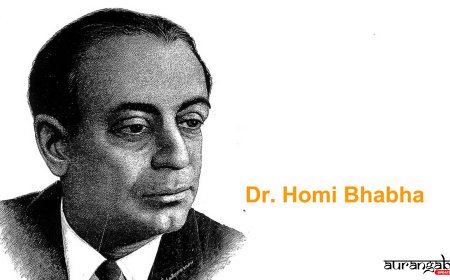
An analysis of the historic 1955 Geneva Conference on the "Peaceful Uses of Atomic Energy," where Dr. Homi J. Bhabha presided as President, offers a startlingly relevant playbook for India today. Just as Bhabha navigated the nuclear monopoly of the West to secure India’s energy sovereignty, India must now navigate the "Big Tech" monopoly to secure its digital sovereignty.
The 1955 Moment: "Atoms for Peace" as a Double-Edged Sword
In the 1950s, the US launched the "Atoms for Peace" program. On the surface, it was a benevolent offer to share nuclear technology with developing nations. In reality, it was a strategy to create markets for American reactors and prevent other nations from developing independent weapons capabilities.
The Bhabha Masterstroke: Homi Bhabha saw through this. He accepted international cooperation but firmly rejected dependency.
-
The "Don't": He refused to let India become a mere customer of enriched uranium, which would have made India’s energy security dependent on US foreign policy.
-
The "Do": He devised the Three-Stage Nuclear Programme, focusing on Thorium—a resource India had in abundance—ensuring that India’s path to energy was indigenous and unshakeable.
The 2026 Parallel: "AI for All" vs. Data Colonialism
Fast forward to today. The "Atoms for Peace" rhetoric has been replaced by "AI for Good" or "Democratizing AI" by Silicon Valley giants. Companies like OpenAI, Google, and Anthropic offer powerful models (LLMs) to the world.
However, the risk remains the same: Technological Dependency. If India relies solely on models trained in the West, using Western data and Western computing infrastructure (GPUs), it risks becoming a "digital colony."
The Do’s and Don’ts for India in the Age of AI
Drawing from Bhabha’s legacy, here are the strategic imperatives for India:
1. DON'T be just a 'User'; DO be a 'Creator'
-
Lesson: Bhabha didn’t just want electricity; he wanted the technology to produce it.
-
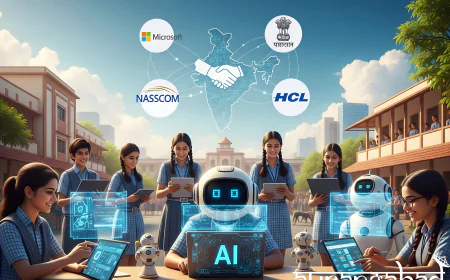
AI Strategy: India cannot be satisfied with just using ChatGPT or Gemini. The India AI Mission must focus on building "Sovereign AI"—indigenous foundational models trained on Indian languages and diverse Indian datasets.
2. DO Control the Infrastructure (Compute)
-
Lesson: In 1955, Bhabha realized that without reactors (Apsara, Cirus), theory was useless.
-
AI Strategy: The modern equivalent of a nuclear reactor is the GPU Cluster. India needs to build massive, government-backed or public-private computing infrastructure so that Indian startups aren't forced to pay rent to foreign cloud providers.
3. DON'T Accept "Black Box" Technology
-
Lesson: Bhabha insisted on mastering the entire fuel cycle.
-
AI Strategy: We cannot rely on "Black Box" AI models where we don't know how the algorithm makes decisions. India must champion Open Source AI and transparent algorithms to ensure national security and prevent bias.
4. DO Leverage Non-Alignment
-
Lesson: Bhabha engaged with the US, UK, Canada, and the USSR, taking the best from each without aligning with a bloc.
-
AI Strategy: India should collaborate with the US on semiconductor supply chains (iCET) while simultaneously building its own hardware capabilities, refusing to get locked into a single ecosystem.
Conclusion: In 1955, Homi Bhabha famously predicted that "nuclear energy is not the energy of the future, but of the present." He was right. Today, AI is the energy of the present. To succeed, India doesn't need a new strategy; it simply needs to dust off the files from 1955 and apply the "Bhabha Doctrine" to the digital world.