



























India-US Trade Deal: Exports to Surge as Trade Surplus with Washington Set to Cross $90 Billion – SBI Report
A new SBI research report predicts that the India-US trade deal will push India's trade surplus with Washington to a record $91 billion by FY27. With sectors like textiles and pharmaceuticals gaining zero-duty access, India is set to become a key beneficiary of the 'China Plus One' strategy.

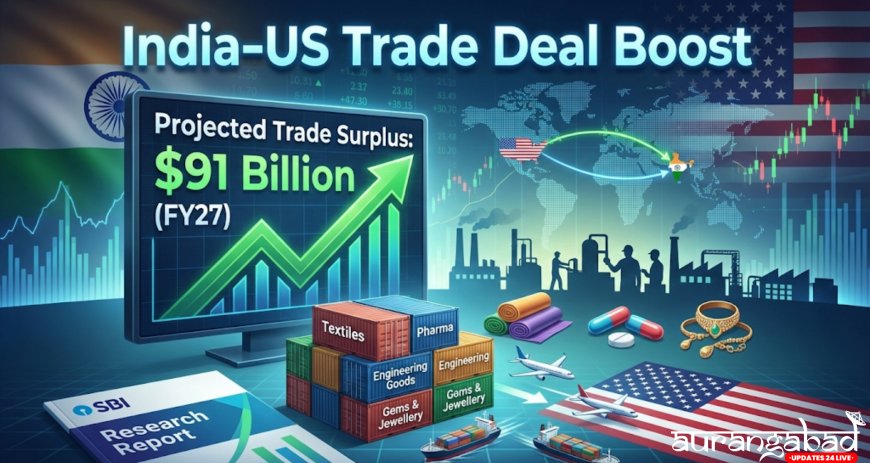
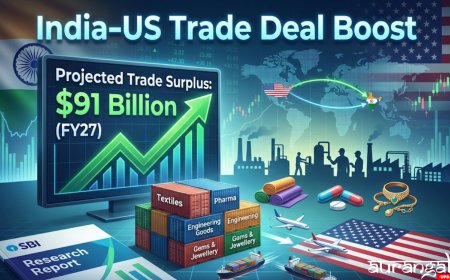
Mumbai / New Delhi: The recently concluded India-US trade deal is not just a diplomatic victory; it is poised to be an economic game-changer. According to a comprehensive research report released by the State Bank of India (SBI) on Wednesday, the pact is expected to catapult India’s trade surplus with the United States to unprecedented levels, crossing the $90 billion mark within the next fiscal year.
The report, titled "Trade Pact: A New Dawn for Indian Exports," analyzes the immediate and long-term benefits of the deal, particularly the restoration of duty-free access for Indian goods. It suggests that India is arguably the biggest winner in the shifting global supply chain dynamics.
Key Projections: The Numbers Game
The SBI research team, led by Group Chief Economic Adviser Soumya Kanti Ghosh, has outlined a bullish trajectory for India's exports.
-
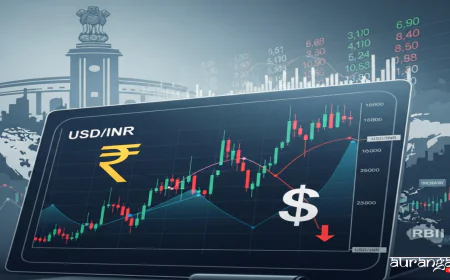
Trade Surplus: The report estimates that India’s merchandise trade surplus with the US will widen from the current levels to $91 billion by FY 2026-27.
-
Export Growth: With tariffs eliminated on key labor-intensive sectors, Indian exports to the US are projected to grow by an additional 15-20% annually.
-
Service Sector: While the deal focuses on goods, the "halo effect" is expected to boost service exports (IT and consultancy) as US companies deepen their footprint in India.
Why the Surge? The 'Zero-Tariff' Effect
The report highlights that the removal of US import duties—which previously ranged from 3% to 15%—will make Indian products significantly more competitive against rivals like Vietnam and Bangladesh.
-
Textiles & Apparel: This sector is expected to be the biggest beneficiary. The report notes that Indian garments, which were losing market share due to tariff disadvantages, will now see a "V-shaped recovery" in US demand.
-
Pharmaceuticals: India, already the largest supplier of generic medicines, will see its margins improve. The SBI report predicts a $2-3 billion jump in pharma exports alone over the next 18 months.
-
Gems & Jewellery: With the 5.5% duty gone, Surat’s diamond industry is prepping for a demand spike from American retailers ahead of the holiday season.
The 'China Plus One' Accelerator
The SBI report places this deal in the context of the broader geopolitical shift.
-
De-risking: As US companies actively seek to "de-risk" from China, India has positioned itself as the most viable alternative. The trade deal acts as a formal invitation for US supply chains to relocate to India.
-
Investment Inflow: The report argues that higher exports will lead to higher Foreign Direct Investment (FDI). US firms are likely to set up manufacturing units in India to export back to the US duty-free.
Challenges Remain
However, the report also sounds a note of caution.
-
Non-Tariff Barriers: While duties are gone, Indian exporters must still navigate stringent US labor and environmental standards.
-
Logistics Cost: To fully capitalize on this opportunity, India needs to further lower its logistics costs, which are currently higher than global benchmarks.
Conclusion: The SBI report validates the government’s strategy of prioritizing trade pacts with developed economies. By securing preferential access to the world's largest consumer market, India has effectively insulated its export sector from global slowdowns. As the report concludes, "The $90 billion surplus is not just a number; it represents millions of jobs in India’s manufacturing heartland."